Sometimes it takes everything falling apart at once to finally see the path forward.
While walking up the stairs of the library, the other gift I was holding, along with the flowers in my hand, was shaking. It had not even been a year since I lost my mother. I was afraid, but I was also hopeful.
In a quiet corner of the library, I handed her the flowers. She accepted them with a broad, joyful smile. I expressed my feelings and thoughts toward her. From her gestures and facial expressions, I could tell she was very happy and deeply touched.

But a few minutes later, her expression grew serious. It was at that exact moment I realised something was wrong. She told me there was someone else in her life; even though they were far apart, she still felt a bond with him.
I showed my respect and quietly walked away.
Looking back now, I am surprised by how small that moment actually was — and yet how powerfully it shaped what came next. The memories that change everything are not always the grand ones. They are the quiet ones; the ones that catch you off guard, the ones you barely notice at the time.
Sometimes the glass is already full. It only takes one small drop to make it overflow — and push you toward the most radical decisions of your life.
That afternoon in the library turned out to be one of them. And looking back, I am glad it did.
The Breakig Point
I returned home and began to think. I was studying in a department I had not chosen, at a university I did not want to attend, surrounded by people I did not connect with. Not long before, I had lost my mother — the most important person in my life. Something was not right. Things were not on track.
Within a few weeks, a close friend told me he had decided to drop out of school. He could not continue, he said, and he was serious. He advised me to consider doing the same. I had always wanted to be an engineer.
It matters not how strait the gate,
William Ernest Henley, “Invictus” (1888)
How charged with punishments the scroll,
I am the master of my fate:
I am the captain of my soul.
Two Roads, One Year
I sat down and seriously began to consider dropping out. If I graduated, I would become a mathematician with the chance to pursue scientific research. But even though I loved mathematics, seeing its real-world applications and solving practical problems was far more appealing to me. After long review, I was left with two choices: drop out and prepare for the university entrance exam again to study engineering, or stay and abandon my dream.
Mapping the Decision
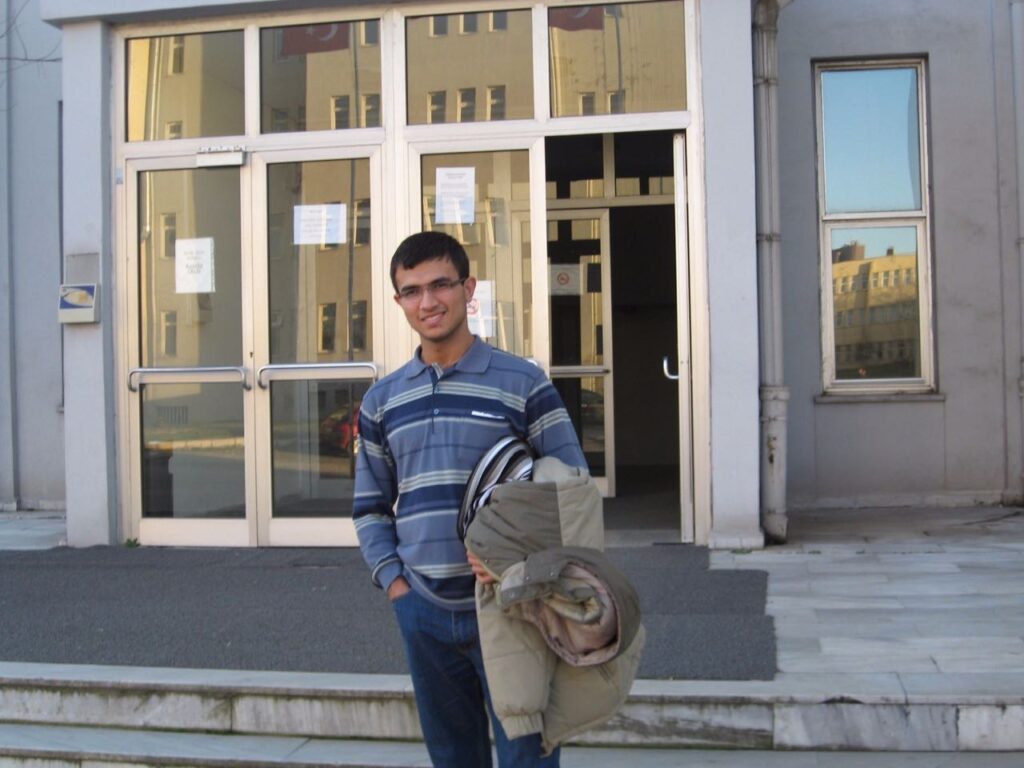
I mapped the options in my mind like a virtual decision tree, the asymmetry became obvious. The downside of leaving was one year. The downside of staying was a lifetime.
It was a difficult decision. It meant changing my entire way of living, and I did not have much time. If I was going to prepare for that year’s student selection exam, I had to decide within a month.
These kind of radical decisions include uncertainity. It means risk. A Decision Tree is a practical tool for exactly this kind of uncertainty — I explore how to build one: How to use a Decision Tree for Better Decisions.
Looking back, I have made far more radical decisions than the average person — and a significant portion of them turned out in my favour. A small part went against me, but those taught me lessons I will never forget. What went through my mind was this: if I give up now and abandon my dream, how will I ever find the strength to pursue my goals in the future?
The challenge was immense. I did not just want to study at any engineering faculty — I wanted one of the best in Turkey. That meant placing in the top 20,000 out of approximately 1.5 million students: the top 1%.
Defining the Worst Case
My mind was flooded with questions. Making this decision meant completely isolating my social life. No girlfriend, No friend, No cinema, picnics, games, or bowling. No café meetups or dinners out. Every minute, every second had to count. Reading extensively, researching deeply, and closing the gaps in my knowledge was non-negotiable. On top of this, enrolling in exam preparation courses was essential — and it required money I was not certain I had.
And what if I failed? If I dropped out and told my friends I was leaving, then returned having failed, the humiliation would be devastating – I thought like that but now I think differently. To compete with students who had been preparing for three or four years, I estimated I needed to solve 250 to 300 questions a day, read five or six books a month, and study eight to ten hours every day.
The Benjamin Franklin Test
While my mind was lingering on those thoughts, I walked into a book store and noticed Milton Meltzer’s Benjamin Franklin: The New American book. His decision making logic also inspired me as well. He was recommending a trade-off method to his friend in London to make a decision and it was practical. You could get more information by checking this article.
On one side: the comfort of staying, the fear of failure, the social humiliation if I returned. On the other: the dream of engineering, the weight of regret if I never tried, and the knowledge that I could not respect myself if I walked away without a fight.
And then I found the thought that gave me peace: if I leave and fail the exam, at most I will finish my original degree one year late. That is the worst case. One year. If I stay, the worst case is a lifetime of wondering.
When I looked at both sides honestly, the answer became clear.
The Journey
I made my decision. The path was clear: I would leave, face this difficult journey, and do my best.
Convincing my father required determination. A few weeks later, the anxiety set in — real, overwhelming anxiety. What if I failed? For a few days, the fear of that question prevented me from doing almost anything else. But I did not back down. I kept preparing. I kept going.
Throughout the preparation, I studied with an intensity I had never experienced before. Some days I solved 300 to 350 questions, devoting 10 to 12 hours to studying. I would work for 29 or 30 days straight — and on the final day of the month, when my body simply could no longer bear the sight of a book, I would go into nature. Long walks. Picnics. No screens, no phone, no technology. The next day, I would start again.
This continued for ten months. For ten months, no social activities — cinema, picnics, games, bowling, café meetups — all of it was off the table.
The Result
A month or two after the exam, my friend — the one who had dropped out with me — and I went to an internet café to check our results. When we both entered our numbers, we saw that we had been admitted to the places we had hoped.
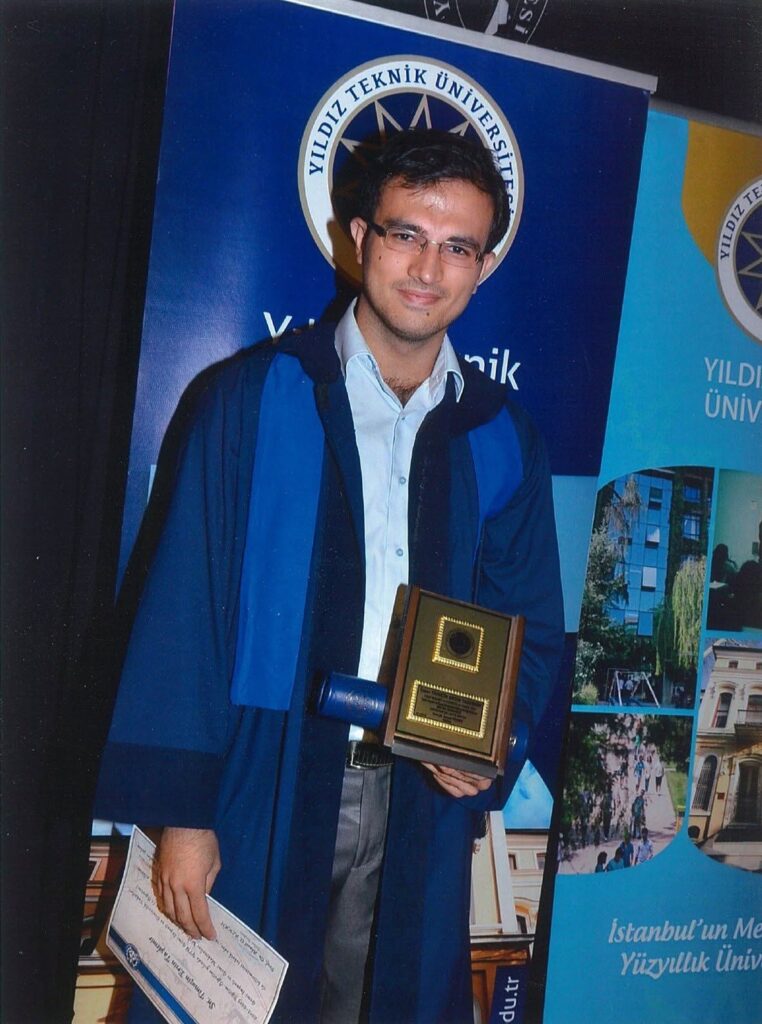
I later graduated from Yildiz Technical University — one of Turkey’s most respected engineering institutions — ranking third in my department and receiving the rector’s honours award. I then completed my master’s degree in Mechanical Acoustics, Vibration, and Dynamics at Istanbul Technical University: the very place I had always dreamed of attending.
What to Do Tomorrow
Looking back, this was not a rational decision in the conventional sense. The odds were against me. But it was the right decision — for who I was, what I valued, and who I wanted to become. That distinction between rational and right is something I have spent years thinking about. It is part of why I write. You can read further about rational vs right decisions in this article.
In life, sometimes you need to make radical decisions. You will be afraid. You will worry. Your days and nights will blur together. But making those decisions — the ones that truly matter — can bring returns that transform your life entirely.
If I had not made that decision, I would not be where I am today. I would not be the person I am today. And I would probably still be wondering.
The next time you face a decision that feels too difficult, too risky, too uncertain — write down both paths. Define the worst case for each. Weigh them honestly. Think.
References
- Henley, W. E. (1888). Invictus. Poetry Foundation. https://www.poetryfoundation.org/poems/51642/invictus
- Meltzer, M. (1988). Benjamin Franklin: The New American. Franklin Watts.

Timucin Tasdemir, M.Sc.
Decisions aren’t found. They’re built.
I write about decision-making, cognitive biases, and decision architecture at Decision Eye. Most poor decisions come not from a lack of intelligence, but from a lack of structure.
Disclaimer: The views and opinions expressed in this article are solely my own and do not reflect the official policy or position of any past, present, or future employer or affiliated organisation. This content is intended for informational and educational purposes only and does not constitute professional advice.
Leave a Reply