What makes a decision right in business? We often seek for right decisions but as I learn ‘right’ and ‘rational’ are not the same.
The Story
In my early 20s, I was working for a software distributor to sell Engineering Software Solutions to B2B customers. As a field seller, I was good at my job and liked to help clients. The clients were big and important companies. I was meeting with individual contributors and even Senior Level Executives.
One day, I was called for a training session regarding mechanical analysis by a big construction company that delivers significant projects internationally. I went to their headquarters and met with engineers who were waiting for me. In the training room, there was an interesting atmosphere and it seemed like confusion to me. I found a room full of experienced engineers waiting for my lesson to practice knowledge on their projects. From the start of my lesson, after receiving a couple of questions I realized that they weren’t like normal students. These engineers weren’t seeking a tutorial; they were seeking a miracle to solve a complex task. Their questions were specifically about shortcuts and how to make the project quickly. I started to ask some digging questions and realized that they were joining this training to make a simulation on their Central Asia Fair Project. However, the design they were working on was a complex structure, similar to this:

After a chat around 30-45 minutes then I fully understood their intent. They would like to make a mechanical simulation of this design. Long story short, I said they wouldn’t be able to complete this project in training or after training as quickly as they expect. Then Head Engineer said this to me:
“I have been in this industry for years but this is the first time my hand is shaking to sign this project.”
Because, it was a big responsibility and a catastrophic damage would happen in case of a failure. This reason made their decision to analyze the structure “rational”.
The Definition
A decision can be right without being rational and can be rational without being right. Isn’t it interesting? Don’t be confused, let me explain it to you.
In today’s complex business world, there is a debate about correct choice. In his book, An Introduction to Decision Theory Martin Peterson provides a clear definition: “A decision is right if and only if its actual outcome is at least as good as that of every other possible outcome.”
Furthermore, about rational decision: “A decision is rational if and only if the decision maker chooses to do what it has most reason to do at the point in time at which the decision was made.”
This could lead to a paradox: How people could make irrational decisions? Well, actually we have a long history of records that some irrational decisions generated good outcomes. Let me bring you to the 1700s for an interesting example discussed in Peterson’s work which highlights the difference between “right” and “rational”.
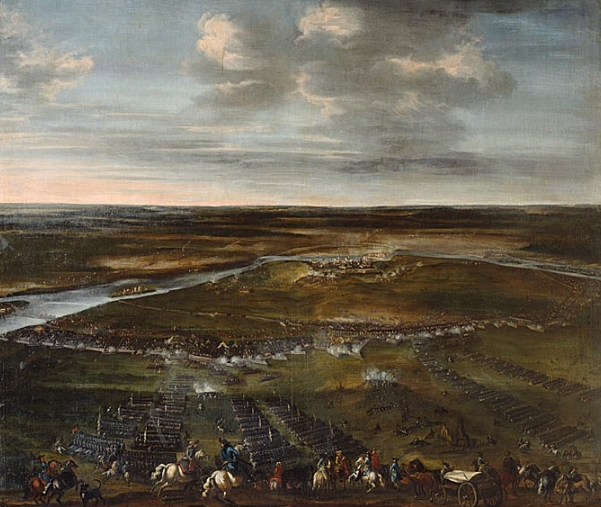
Battle of Narva
In the battle of Narva, 20th. November 1700 The King Charles of Sweden and his 8000 troops attacked the Russian Imperial Army, led by Tsar Peter The Great. The Russian Imperial Army had more than (approximately ten times) more than the Swedish Army. Most Historians agree that The Swedish attack was irrational because The Russian Imperial Army was much bigger than them, since it was almost certain to fail. However, despite this fact The Swedish Army won. That made The King Charles attack decision right.
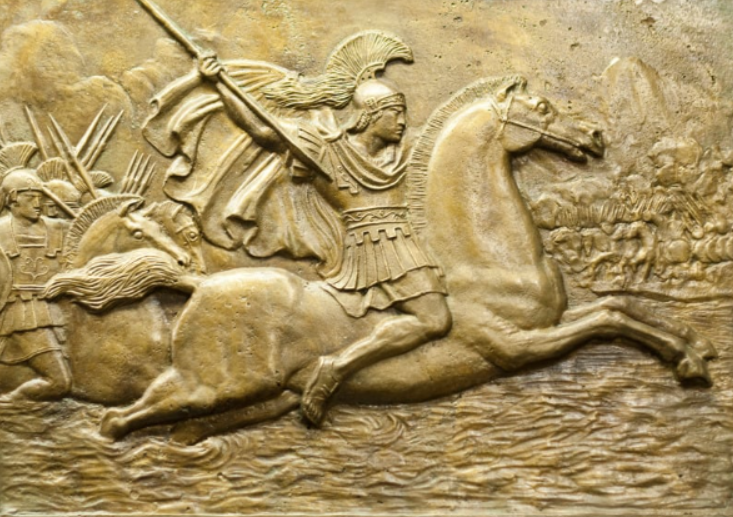
Battle of Issus
There are many examples of irrational decision making in history. Another example is Battle of Issus. Alexander led a decisive cavalry charge on the Persian left flank, breaking their lines and forcing Darius to flee the battlefield. As a result, not only was Darius defeated but also his family was captured. Darius’ army was bigger than Alexander’s army and Darius had more advantage than Alexander. Alexander’s decision to lead cavalry on the left Persian flank seemed irrational, if Darius had considered the risk such an attack would be dismissed but it worked well for Alexander. So, Alexander’s decision was right.
Takeaways for Tomorrow’s Meetings
- A decision is rational if and only if the decision maker chooses to do what it has most reason to do.
- A decision is right if and only if its actual outcome (result) is at least as good as that of every other possible outcome.
- A decision can be right without being rational and can be rational without being right.
- History is full of these cases if you look deeply. When you sit in your next meeting ask yourself this question: Are we making the most rational choice which will lead to the right outcome or one that relies purely on luck?
References
- Peterson, M. (2017). An Introduction to Decision Theory. 2nd ed. Cambridge: Cambridge University Press.
- Wikipedia contributors, “Battle of Issus,” Wikipedia, The Free Encyclopedia, https://en.wikipedia.org/wiki/Battle_of_Issus (accessed February 16, 2026).
Disclaimer: The views and opinions expressed in this article are solely my own and do not reflect the official policy or position of any past, present, or future employer or affiliated organisation. This content is intended for informational and educational purposes only and does not constitute professional advice.
Enjoyed this perspective? Please join my newsletter to stay connected about more insights for growth and decision theory.
Leave a Reply